Building a plate, one section at a time
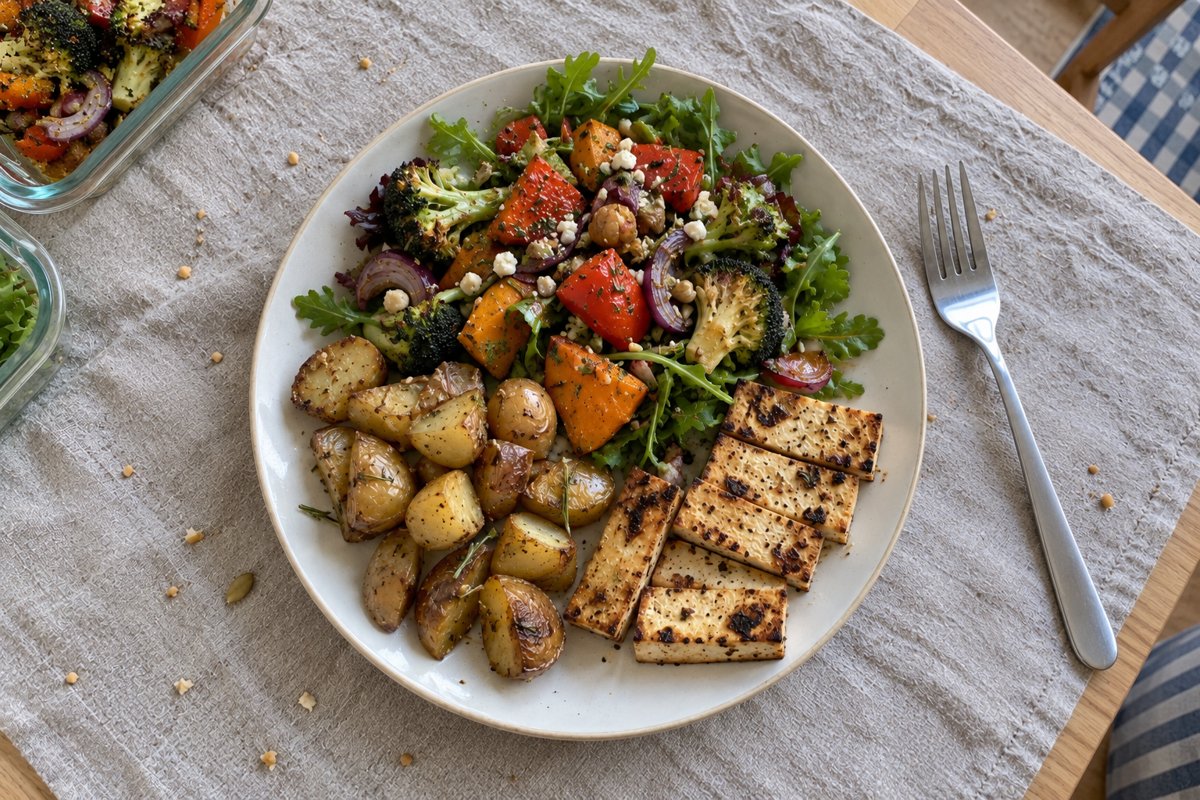
Some evenings I open the fridge and see ingredients, not dinner. Half a courgette, a few potatoes, a block of tofu, a bag of salad that needs eating. On those evenings, I stop thinking about recipes and start thinking about the plate.
The idea is borrowed from the familiar “balanced plate” picture used in lots of food guides: roughly half the plate vegetables or salad, a quarter something starchy, a quarter something like meat, fish, eggs, beans or tofu. I don’t use it as a prescription. I use it as a sketch, a way of arranging dinner when my imagination has gone home early.
How I use the sketch
I literally picture a plate divided into sections:
- Half: vegetables. Roasted, steamed, raw, whatever’s there. This is the biggest section and the one that varies most.
- A quarter: something starchy. Potatoes, rice, pasta, bread, couscous.
- A quarter: a protein ingredient. Chicken, fish, eggs, lentils, beans, tofu.
Then I fill each section from what’s in the fridge. It’s surprising how often three random leftovers turn into a decent dinner once they each have a job.
The dinner in the photo
Dinner note · Serves 2
- 400 g potatoes, cut into chunks
- 1 courgette, 1 red pepper and 1 red onion, cut into pieces
- a head of broccoli, in small florets
- 200 g firm tofu, sliced and patted dry
- 2 tablespoons olive oil, salt, pepper, smoked paprika
- 2 big handfuls of rocket or salad leaves
Toss the potatoes in half the oil and roast at 200 °C for 15 minutes. Add the vegetables with the rest of the oil and roast for another 20 to 25 minutes. Meanwhile, fry the tofu slices in a dry non-stick pan until golden, then season with paprika. Plate up: salad and vegetables on one half, potatoes and tofu on the other two quarters.
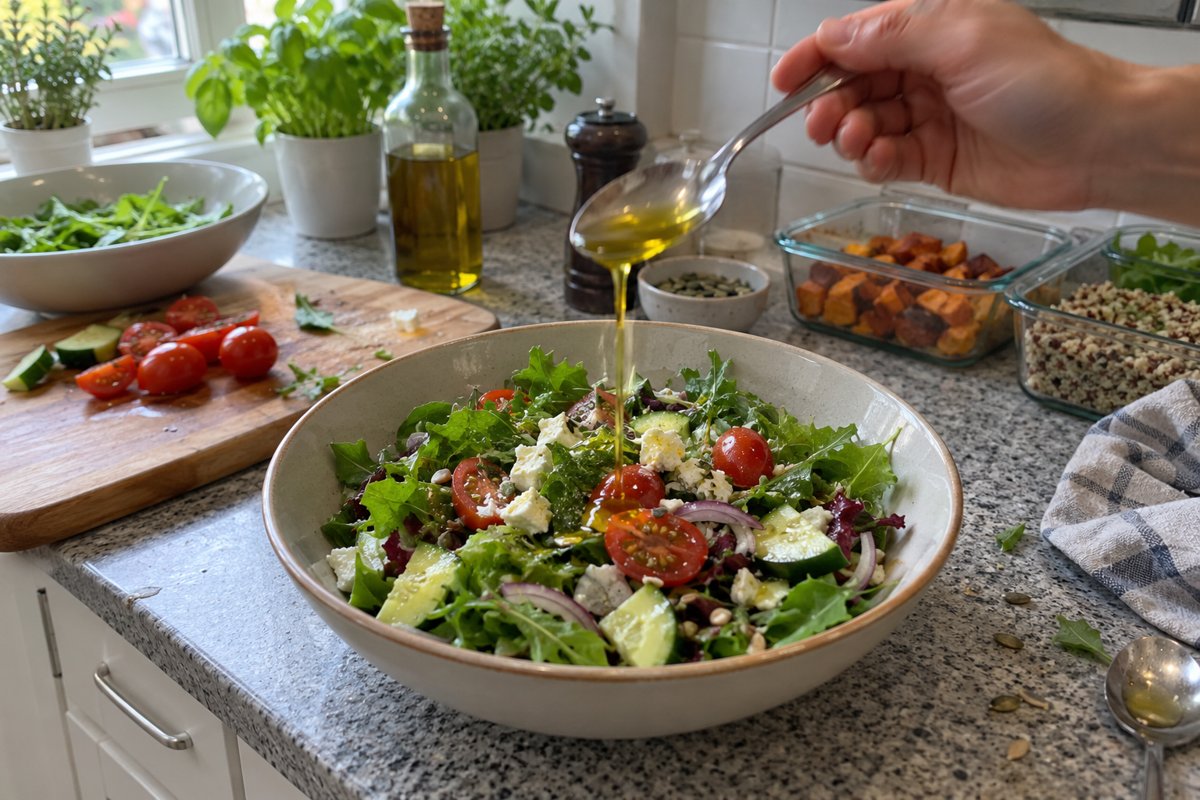
I measure the oil with a tablespoon. It’s one of the few things on the plate that’s genuinely hard to judge by eye, and pouring straight from the bottle gives me a different amount every time.
Plate size changes the picture
One thing I noticed while photographing my dinners for this notebook: plate size makes a big difference to how a meal looks. The same amount of food looks generous on a small plate and sparse on a large one. Our everyday plates are about 26 cm across. My parents’ old plates are noticeably smaller, and their “normal” dinners look positively heaped.
That’s why I note down ingredients and rough amounts rather than relying on a photograph alone. A picture of a half-and-quarters plate tells you the proportions; it doesn’t tell you how big the plate was.
Bowls count too
Plenty of my dinners end up in a bowl rather than on a plate: a stir-fry, a curry with rice, a grain bowl. The sketch still works. I just think of it as proportions in the pan instead of sections on the plate: plenty of vegetables, a starchy base, a protein ingredient. The hand comparisons are useful here too, because a fist of rice is a fist of rice whatever it’s served in.
When it doesn’t apply
Not every meal needs to fit the sketch. A bowl of lentil soup with bread doesn’t have sections. Pizza night doesn’t either. Breakfast certainly doesn’t. The plate idea is a tool for the evenings when I need a little structure, not a rule for every meal.
But on those fridge-staring evenings, it works every time. Half, quarter, quarter. Then dinner.