Drink portions at a glance: juice, smoothies and wine
A kitchen-jug reference for the glasses already in the cupboard.
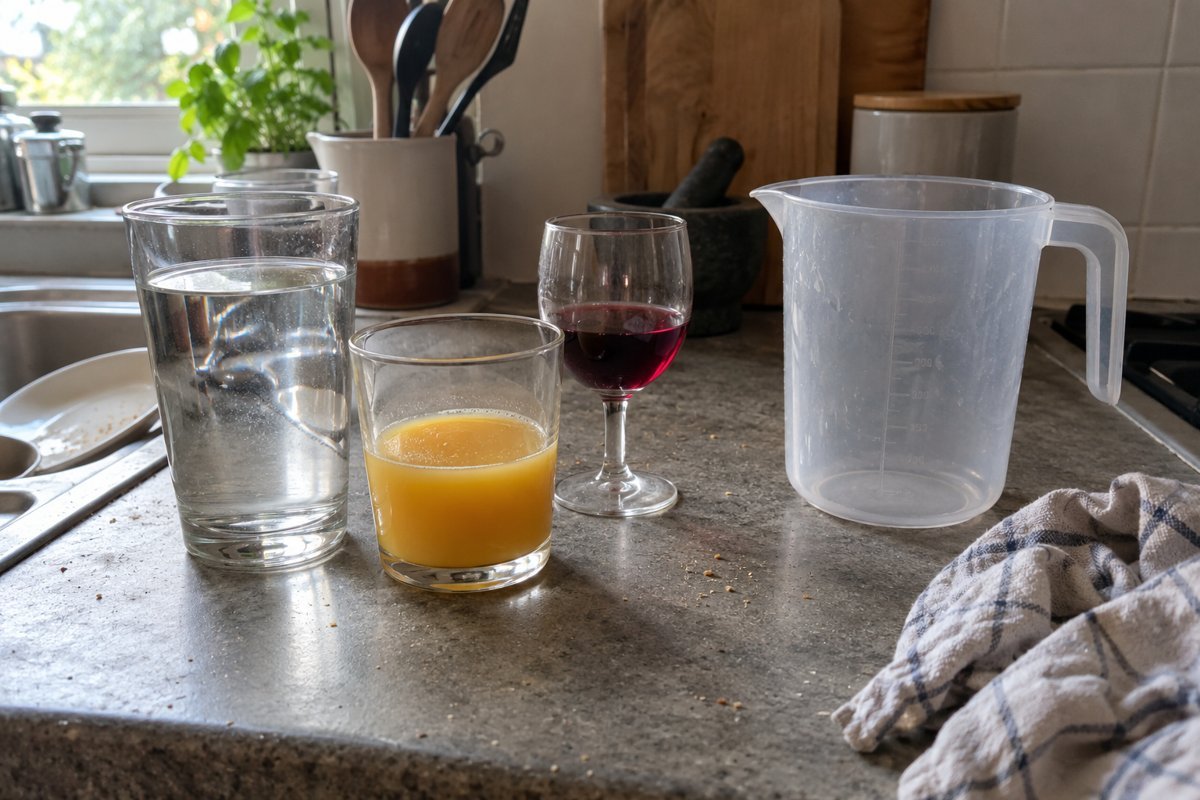
I measured my usual tumbler one evening and discovered that “a small glass” wasn’t a very useful note. It held almost 300 ml filled to the brim. Millilitres are easier to repeat than adjectives, so this is the reference sheet I keep inside the kitchen cupboard door, next to the rice card.
Water is my everyday default. The other entries are here to compare measures and to help me picture amounts, not to suggest a daily drinks menu.
A few familiar measures
There isn’t one universal portion size for every drink. Juice and smoothie portions below use a common 150 ml reference; milk and beer use example serving sizes. For wine, 125 ml is a common small measure, though the words used for glass sizes vary from country to country.
| Drink | Measure | Approx. kcal |
|---|---|---|
| Plain water | 250 ml | 0 |
| Orange or apple juice | 150 ml | 60–75 |
| Fruit smoothie, without extras | 150 ml | 75–120 |
| Semi-skimmed milk | 200 ml | 90–100 |
| Wine, around 12% ABV | 125 ml | 90–115 |
| Beer, around 4–5% ABV | 330 ml | 120–150 |
Calories are rounded examples, not fixed values. Fruit, recipes, milk fat content, alcohol strength and added ingredients all change the result. Check the label for the drink you actually have. ABV means alcohol by volume.
Juice and smoothies: start with 150 ml
A 150 ml measure is a useful reference for either juice or a fruit smoothie. In most of my glasses it barely reaches halfway, which is exactly why I needed to see it. A smoothie with yoghurt, oats or nut butter is really a different recipe, so its figure may be well outside the range above.
For a homemade batch, I add up the quantities in the recipe and measure the finished volume before dividing it into glasses. “One blenderful” is a batch size, not a portion. I wrote up the way I split one blender between two glasses separately.
Milk: write down the type as well
My notebook uses a 200 ml glass of semi-skimmed milk as an example. Whole milk, skimmed milk and plant-based drinks all have different values, so the volume alone doesn’t tell the whole story. I note both: “200 ml, semi-skimmed”. The same goes for the splash in overnight oats, which turned out to be the reason they were never the same twice.
A note on wine and beer
The 125 ml wine glass and 330 ml beer serving are measuring references only. A 125 ml glass of wine is not the same thing as one unit of alcohol, and a measured serving is not a statement that drinking it is safe or recommended.
There is no need to include alcohol at all. If you do measure it, use the actual volume and strength rather than the size of the glass, because many wine glasses hold far more than 125 ml.
How I check a glass at home
- Choose the measure. For example, 150 ml for a juice reference or 125 ml to check a small wine glass.
- Use water first. Put a kitchen measuring jug on a level worktop. Add water to the chosen mark and read the scale at eye level, not from above.
- Pour it into the glass. Notice where the water reaches. A wide tumbler may look surprisingly empty; a tall narrow glass may look surprisingly full.
- Remember the line. Some glasses have a pattern, a seam or a change in shape near the mark. That’s your reference from now on.
- Measure the actual drink if needed. Use a clean jug, then pour it into the glass. For a foamy drink, let the foam settle before reading the liquid level.
A jug with clearly marked small increments makes this easier. If yours doesn’t show 125 ml clearly, use a smaller measuring vessel rather than guessing between widely spaced lines. I did exactly the same with my soup ladle when I was working out how to divide a pot of lentil soup into six bowls.
Why glass shape fools the eye
Wide, short glasses tend to look less full than tall, narrow ones holding the same amount. Our eyes judge height more readily than width, so a tumbler can hold a generous pour while still looking modest. That’s not a flaw in anyone’s judgement; it’s just how glasses look. Checking once with water takes the guesswork out.
The note I’m keeping
Measure once, remember that particular glass, and check again when the glass changes. Most days, mine simply has water in it.