A pot of red lentil soup, six bowls
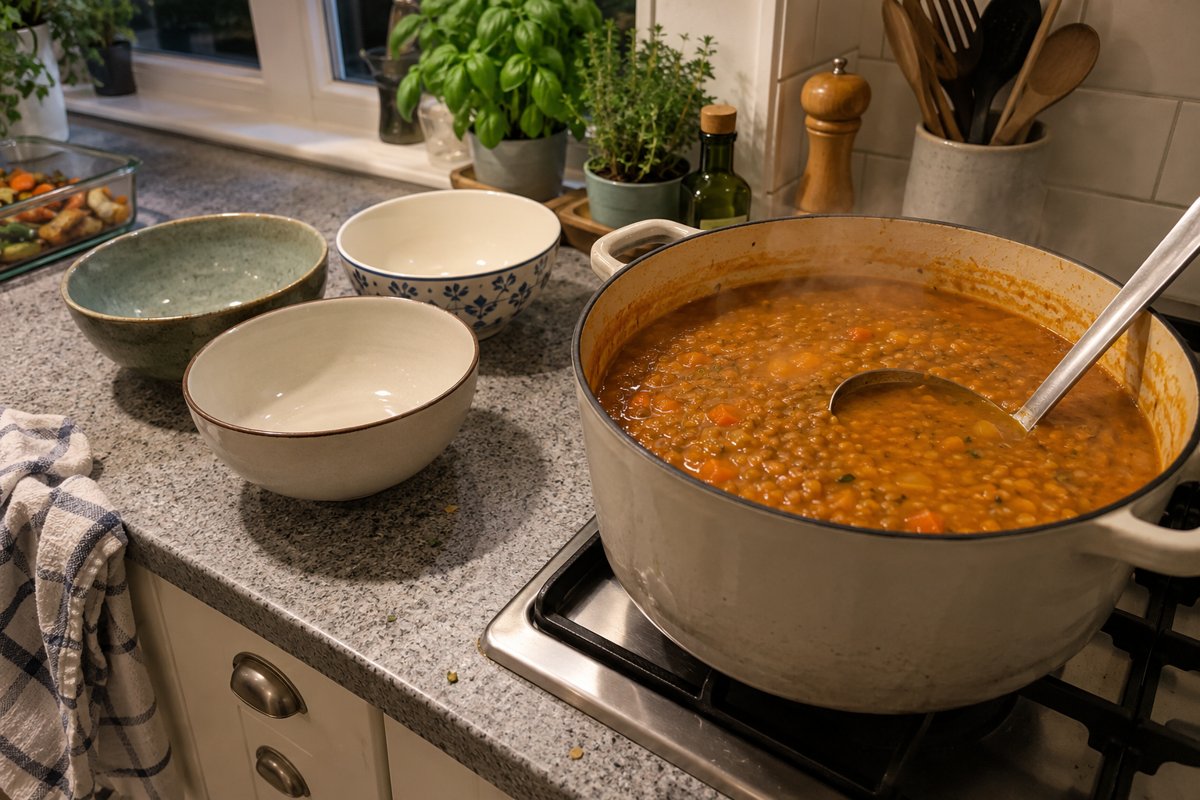
Soup used to be my worst offender for portions. I’d make “a pot”, serve two generous bowls, and then discover on day four that there were still three bowls’ worth sitting in the fridge, slightly sad and thicker than before. Or I’d make a small pan and run out before the second helping.
The fix turned out to be very simple: decide how many bowls the recipe is for, then measure the finished pot. This red lentil soup is the one I make most often, and it’s now written for six bowls.
The recipe
Recipe note · Makes 6 bowls (about 350 ml each)
- 1 tablespoon olive oil
- 1 large onion, chopped
- 2 carrots, diced small
- 2 celery sticks, diced
- 2 garlic cloves, sliced
- 1 teaspoon ground cumin and ½ teaspoon smoked paprika
- 250 g dry red lentils, rinsed
- 1 tin (400 g) chopped tomatoes
- 1.4 litres vegetable stock
- juice of half a lemon, salt and pepper
Soften the onion, carrot and celery in the oil for about ten minutes over a medium-low heat, stirring now and then. Add the garlic and spices for a minute, then the lentils, tomatoes and stock. Bring to the boil, turn it down and simmer for 20 to 25 minutes, until the lentils have collapsed. Blend part of it if you like it smoother, then add the lemon juice and season.
Measuring the finished pot
Here’s the part that changed everything. Once the soup is done, I find out how much there actually is. My ladle holds about 120 ml (I checked it once with water and a measuring jug, the same way I check my glasses). This recipe gives me around 17 or 18 ladlefuls, which is a little over two litres.
Divided by six, that’s three ladles a bowl, roughly 350 ml. It’s a satisfying bowl for lunch with a slice of bread, and it means the pot divides evenly without me guessing.
If you don’t want to measure the ladle, you can count ladles instead. Note how many the pot gives you, divide by the number of portions you wanted, and write the answer on the recipe. Next time, you’ll know.
Why six?
Six suits the way we eat: two bowls tonight, two for lunch tomorrow, two for the freezer. A soup that makes eight sounds efficient, but in a small household the last two bowls are the ones that get forgotten. I would rather make six that all get eaten.
The lentils are what make it work. Red lentils are cheap, quick and don’t need soaking, and 250 g dry is easy to weigh straight from the bag. I keep the same habit as with pasta: note it as dry weight, because cooked lentils weigh a lot more.
Storing the extra bowls
I ladle the extra portions straight into containers while the soup is still hot, then let them cool with the lids off before they go in the fridge. Three ladles per box, so every container is exactly one bowl. If I’m freezing some, I leave a little space at the top because soup expands as it freezes.
The freezer portions get a label with the name and the date, which sounds obvious but took me a while to start doing. I’ve written up my whole freezer routine separately, mostly because of an unidentified orange box that turned out not to be soup.
Small changes I’ve tried
- Coconut milk instead of 200 ml of the stock makes it richer. The volume stays the same, so it still makes six bowls.
- A handful of spinach stirred in at the end changes nothing about the portions and adds some green.
- More spice is always fine. Less stock makes it thicker, but then you get fewer bowls, so measure again.
The point isn’t precision for its own sake. It’s that “a pot of soup” has become “six bowls of soup”, and that has made a surprisingly big difference to how often we finish it.