My hand-portion cheat sheet
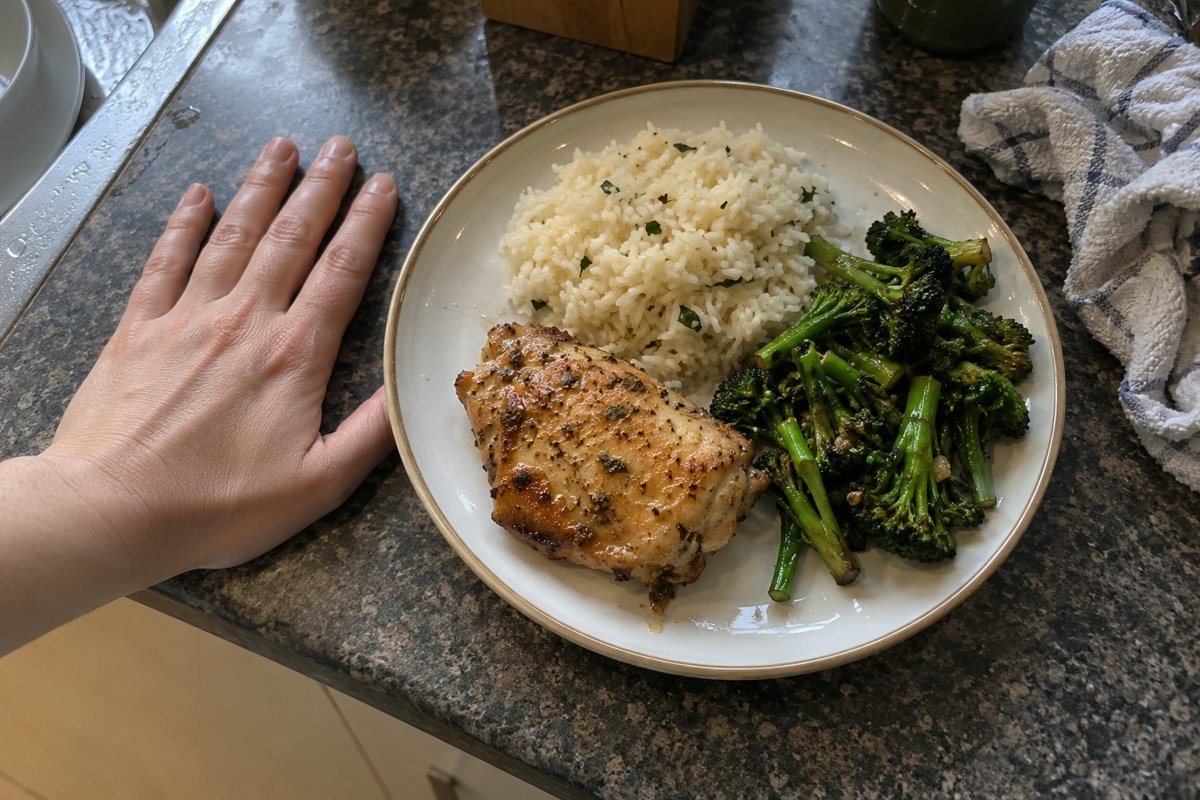
I like weighing things. This notebook started with a kitchen scale and a bag of pasta, after all. But there are plenty of times when the scale isn’t practical: serving dinner, eating at a friend’s, packing a lunch in a hurry. For those moments, I use my hands.
The hand-portion idea is widely used and very simple. Your hand comes with you everywhere, and it’s roughly in proportion to the rest of you. So instead of grams, you describe food in palms, fists, cupped hands and thumbs.
The four comparisons
- Palm = protein
- A piece of chicken, fish or tofu roughly the size and thickness of my palm, without the fingers.
- Fist = carbs
- A mound of cooked rice, pasta or potatoes roughly the size of my closed fist.
- Cupped hand = fruit
- A small scoop of berries or chopped fruit that fits in one cupped hand.
- Thumb = fats
- A rough visual reference for a solid spread or nut butter. I use a spoon for oil when I want a repeatable amount.
These are visual comparisons, not exact measurements and not rules about how much anyone should eat. Hands, ingredients and appetites all vary. I use them to describe a meal so I can repeat or adjust it, not to judge it.
How they line up with my scale
Out of curiosity, I checked my own hand against the scale a few times. My palm-sized piece of chicken came to about 110 to 130 g raw. A fist of cooked rice was around 150 to 180 g, a little less than the boxed portions in my Sunday meal prep. A cupped hand of blueberries was close to 50 g, which is why the overnight oats recipe uses that amount.
Your numbers will be different, and that’s the point. The comparison scales with the person.
Where it works well
Serving dinner. I can put a palm of fish and a fist of potatoes on each plate without weighing anything, and the plates come out even.
Describing a meal in my notes. “One palm chicken, one fist rice, lots of veg” is quicker to write than grams, and it’s good enough to recognise a pattern over a few weeks.
Eating away from home. At a friend’s or a canteen, it’s a neutral way to notice what’s on the plate without making a fuss.
It also pairs well with the half-quarter-quarter plate sketch. The palm fills the protein quarter, the fist fills the starchy quarter, and the rest of the plate is vegetables.
Where it doesn’t
Baking. Never. Baking needs scales; a fist of flour is a recipe for a brick.
Oils and sauces. Liquids don’t fit in a thumb. Oil is easy to pour generously without noticing, so I measure it with a tablespoon. Sauces and dressings get the same spoon.
Mixed dishes. A lasagne or a curry doesn’t separate into palm and fist. For those, I go back to dividing the whole dish, as with the six-bowl lentil soup.
Drinks. A hand tells you nothing about a glass. That’s why I made a separate drink portions sheet based on a measuring jug.
Why I keep using it
The hand method is not precise, and it doesn’t pretend to be. What it gives me is a shared language for portions that I always have with me. When I compare tonight’s plate with last week’s, “a palm and a fist” is enough to tell whether I’m cooking the same meal or drifting.
I’d call it a rough guide that happens to be attached to me. On the days the scale stays in the cupboard, that’s plenty.