Freezer notes: portions I can actually find again
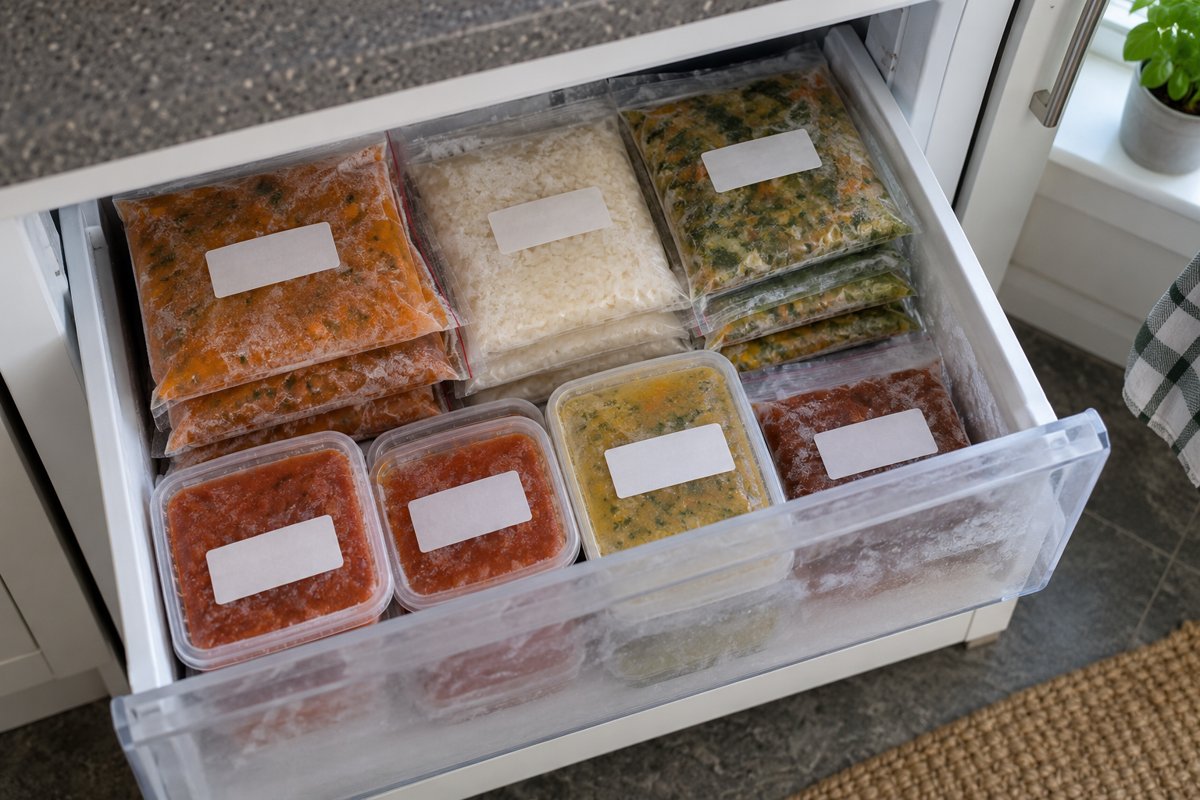
For years my freezer was a museum of unlabelled boxes. I’d put things in with every intention of eating them, then rediscover them months later under a layer of frost, unable to tell whether a box contained soup, curry or a sauce of some kind. The low point was a container I was certain was lentil soup. It was not.
Freezing in portions changed that. Here’s the system, which is really just a handful of small habits.
One container, one portion
Everything goes into the freezer as a single portion. One box is one bowl of soup, one lunch, or one serving of sauce for two people. Never “half a pot”.
This connects to everything else in this notebook: the six-bowl lentil soup is ladled straight into single-bowl boxes, and the later meal prep lunches go into the freezer already divided. When I want something, I take one box out. No defrosting a block and then trying to cut it in half.
Flat bags for liquids
Soups, stews and sauces go into freezer bags laid flat on a tray until they’re frozen. Once solid, the flat bags stand up like files in the back of the drawer. They take far less space than boxes and thaw much faster because they’re thin.
I measure the contents before sealing: 350 ml for a bowl of soup, 200 ml for a portion of sauce. A jug and a funnel make this tidy, though I usually just use a ladle I’ve measured once.
Labels, always
Every bag and box gets a label with three things:
- What it is: “red lentil soup”, not “soup”.
- How much: “1 bowl” or “sauce for 2”.
- The date it went in.
A roll of masking tape and a marker pen is all it takes. I keep both in the drawer next to the freezer so there’s no excuse.
The list on the door
On the outside of the freezer there’s a sheet of paper with a running list: what’s inside and how many portions. When I put something in, I add a line. When I take something out, I cross it off. It sounds fussy, but it means I can plan the week without opening the freezer and letting the cold out.
It’s also a useful nudge. If I see “3 × lentil soup” on the list, I don’t make another pot until those are gone.
Bread, too
Bread freezes beautifully in slices. When I bake a half-size loaf, I slice it all as soon as it’s cool and freeze half in a bag. Slices go straight into the toaster from frozen, so there’s no waste and no stale end of a loaf.
Thawing safely
A few habits I stick to, because they’re straightforward food safety guidance rather than anything I’ve invented:
- Thaw portions in the fridge overnight, not on the worktop.
- Reheat until steaming hot all the way through.
- Don’t refreeze something that has already been thawed and reheated.
- Cool food before freezing; I leave freshly cooked portions to cool for an hour or so with the lids off, then freeze them.
Rice gets a little extra care, as I mention in my rice conversion note: I cool it quickly and freeze it the same day.
How long things stay
Most home-cooked dishes keep their quality for a few months in the freezer. They stay safe longer at a properly cold temperature, but the texture slowly suffers. I try to eat everything within about three months, which is easy when the list on the door reminds me what’s there.
These days, finding dinner takes about a minute. And nothing in the drawer is a mystery any more.