Halving a recipe: what scales and what doesn’t
Most recipes in books and on packets are written for four people. Most of my dinners are for two. For a long time I solved this by making the full recipe and eating the leftovers for days, which is fine with a good stew and miserable with almost anything else.
So I started halving recipes properly. It’s mostly simple arithmetic, but a few things don’t divide neatly, and those are what these notes are about.
What halves easily
The bulk ingredients are straightforward. Meat, vegetables, pasta, rice, potatoes, stock and flour all divide by two without any drama. If a recipe says 800 g chicken thighs for four, two people need 400 g. If it says 300 g dry rice, use 150 g. Weighing helps enormously here, because “half an onion” is fine but “half of four handfuls” is anybody’s guess.
What doesn’t
Eggs. Half an egg is awkward. If a recipe needs one egg for four, I usually use one small egg for two and accept a slightly richer result. For baking where it matters, I beat the egg, weigh it (a medium egg is roughly 50 g without the shell) and use half. The rest goes into an omelette the next morning.
Tins and packets. A tin of tomatoes or beans is 400 g, and half a tin sitting in the fridge tends to get forgotten. I either use the whole tin and accept a saucier dish, or plan a second meal for the other half the same week and write it on the shopping list.
Spices and salt. I halve them, then taste. Strong flavours don’t always scale in a straight line, and it’s easier to add a pinch at the end than to take one away.
Oil for frying. A smaller pan still needs enough oil to coat the bottom, so I don’t always halve it exactly. I measure with a spoon either way, as I explain in my notes on building a plate.
Cooking times and pan sizes
This is the one that catches people out. Halving the ingredients doesn’t halve the cooking time. A chicken thigh takes as long to roast whether there are two or eight on the tray. What does change is the pan:
- Use a smaller dish if you can. Half the food spread across a big tray will cook faster at the edges and can dry out.
- Check earlier with stews and sauces. A smaller volume of liquid reduces more quickly.
- Cakes and bread in a smaller tin may bake a little faster. Start checking ten minutes before the recipe says.
A halved tray bake
Recipe note · Serves 2 (halved from 4)
- 2 bone-in chicken thighs (about 350 g)
- 300 g mixed vegetables: squash, red onion, courgette, pepper
- 1 tablespoon olive oil
- 1 teaspoon dried thyme, salt, pepper, a squeeze of lemon
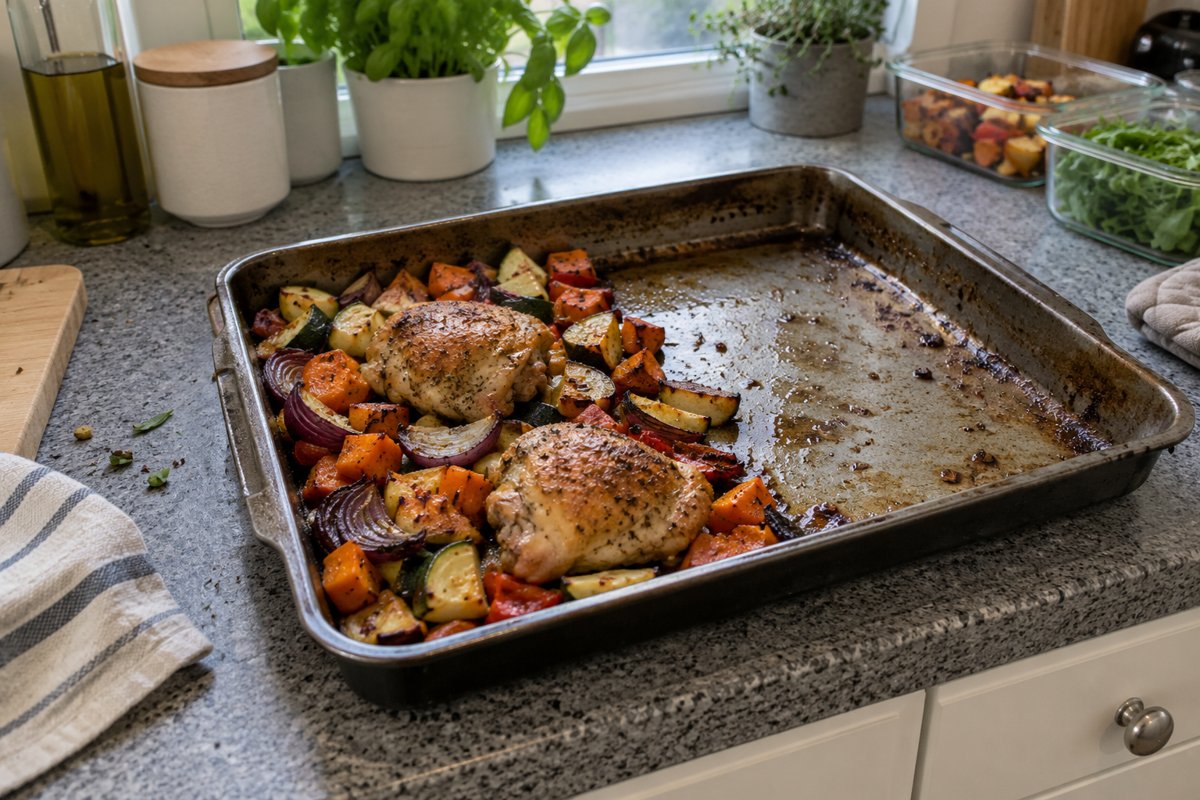
Toss everything with the oil and seasoning, arrange in a single layer and roast at 200 °C for 35 to 40 minutes, until the chicken is cooked through and the juices run clear. My only real tray is large, so as you can see in the photo, half of it stays empty. It works, but the vegetables at the edges brown faster; I give them a stir halfway.
Halving a bread recipe
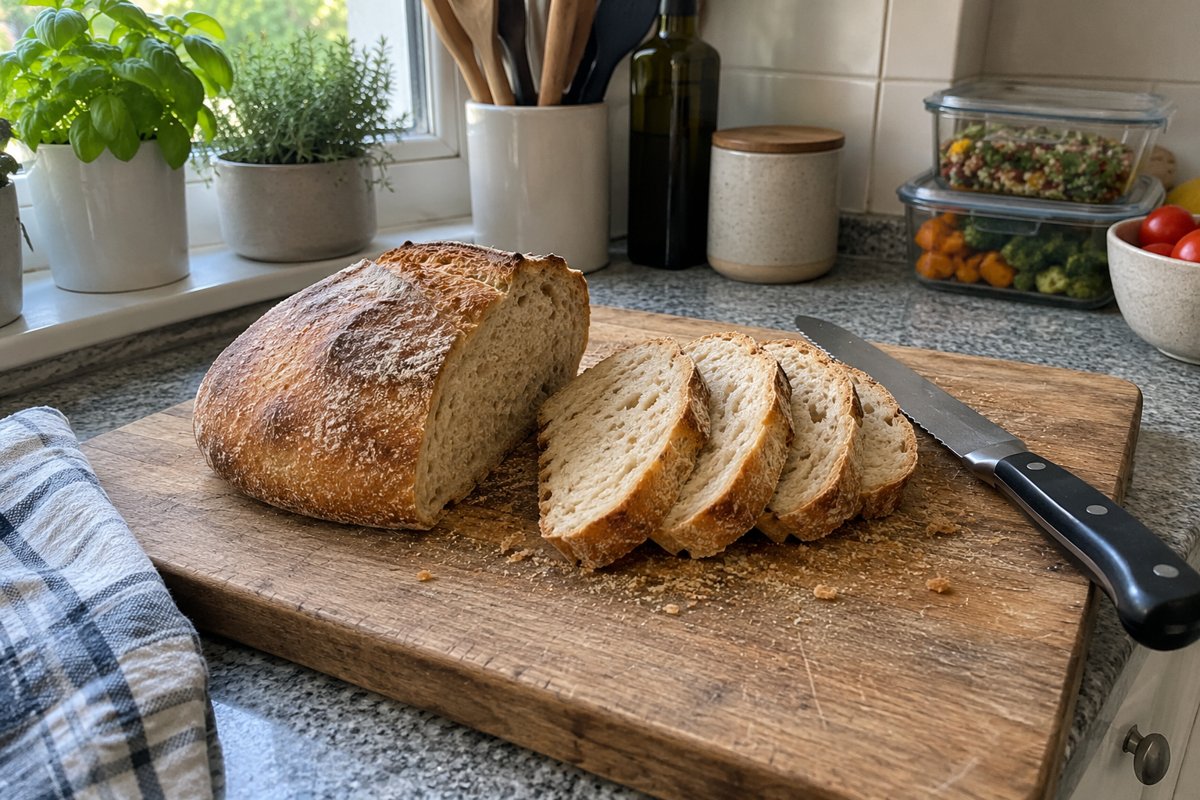
I also bake a small loaf from a halved recipe: 250 g flour instead of 500 g, half the water and salt. The yeast is the one ingredient I don’t cut exactly; a slightly generous half-sachet is fine. The smaller loaf bakes about ten minutes faster. I slice it all at once and freeze half, which brings me back to my freezer notes.
The habit that helps
Whenever I halve a recipe, I write the halved quantities directly in the margin of the book, in pencil. The next time, there’s no arithmetic and no half-tin surprises. Like the pasta weights, it’s about doing the thinking once.